






By K. Gopalakrishnan
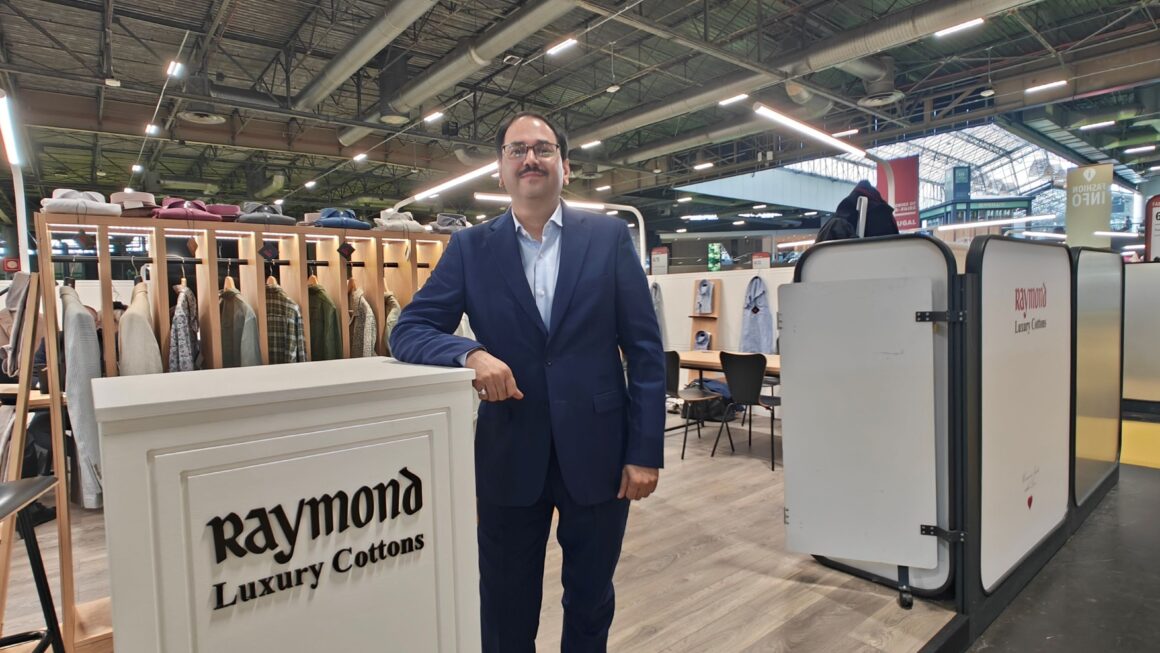
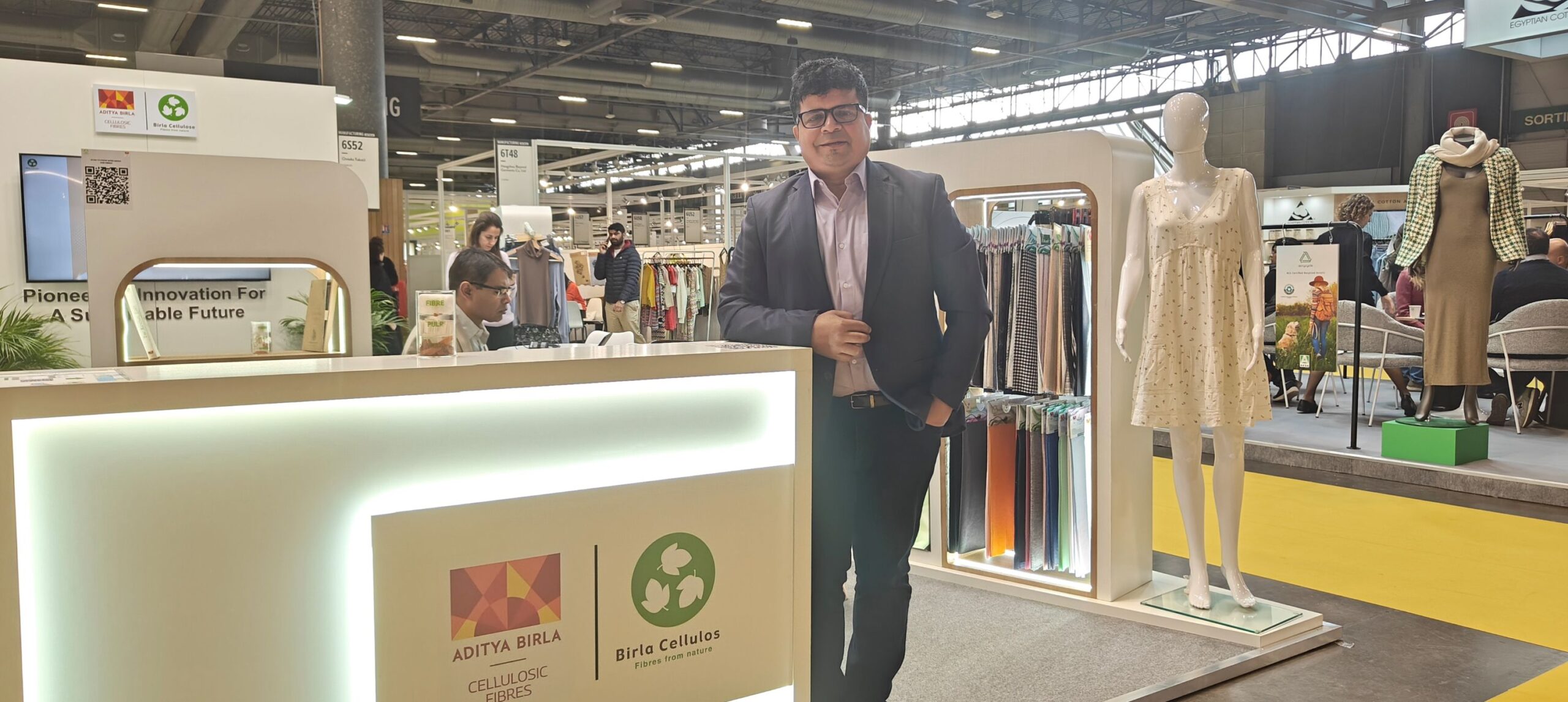
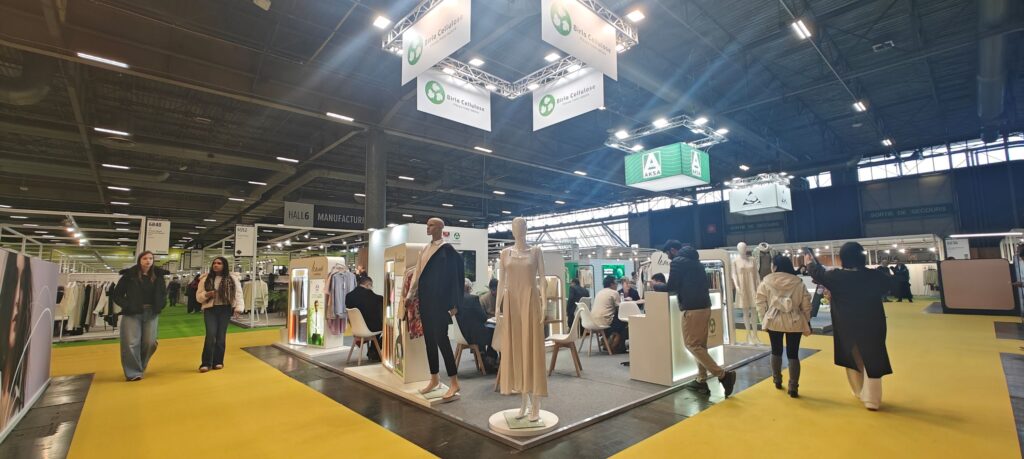
At a time when the global textile and apparel industry is navigating trade realignments, evolving consumer preferences, and rising sustainability expectations, ingredient brands are assuming a far more strategic role across the value chain. At the recently held Première Vision in Paris, Aditya Birla Group’s Cellulosic Fibres Business showcased how man-made cellulosic fibres (MMCF) are poised to shape the future of comfort, circularity, and responsible fashion.
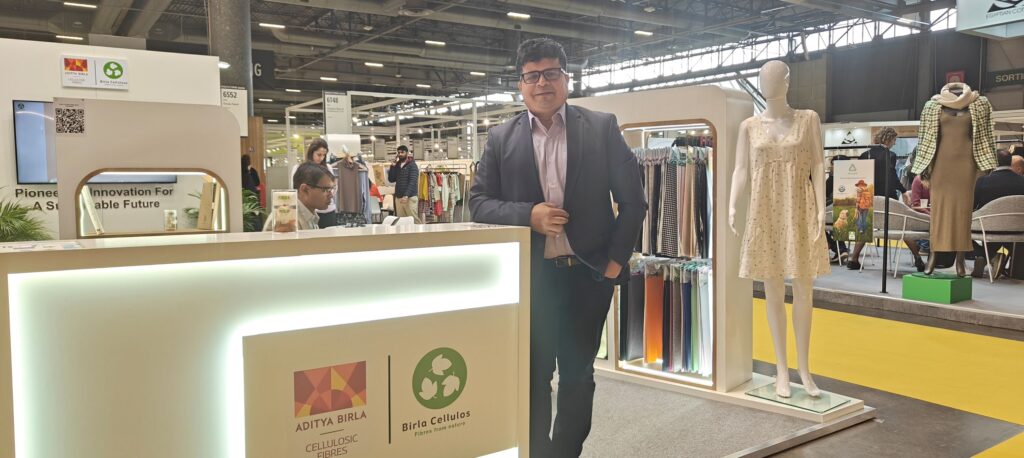
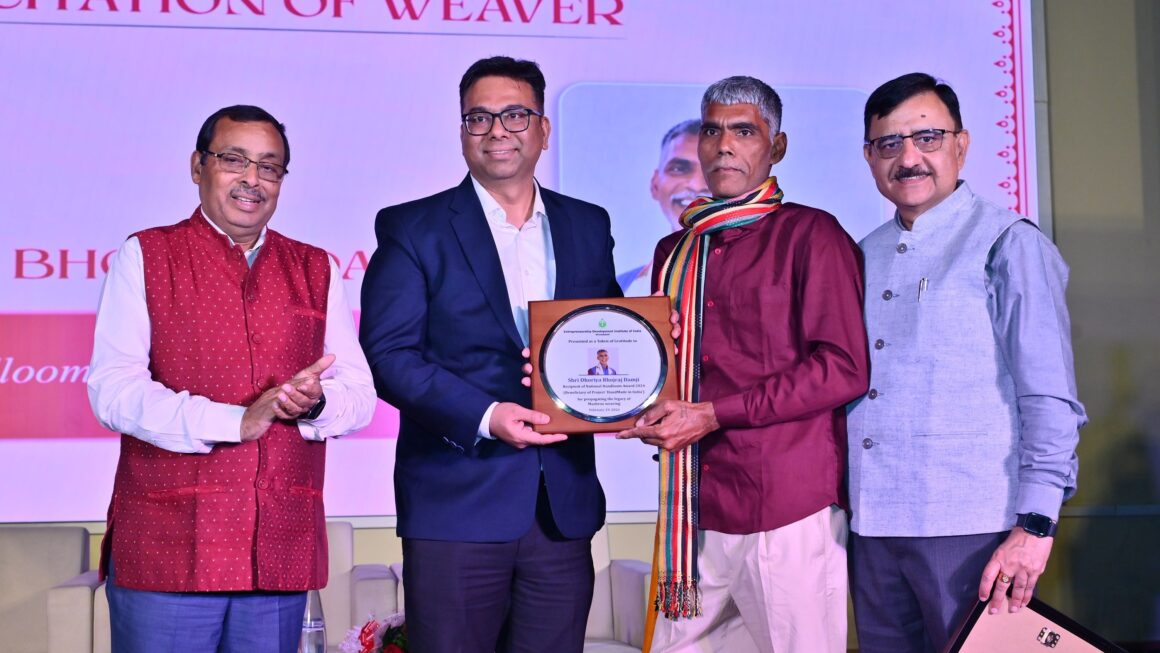
In an exclusive interaction at the show, Jyoti Prakash Mohapatra, Joint President – Marketing & Business Development, Cellulosic Fibres Business, shared insights into Birla Cellulose’s product strategy, sustainability leadership, global manufacturing footprint, and how India stands at a decisive inflection point in the global textile value chain.
A Consistent Presence at Première Vision
For Birla Cellulose, participation at Première Vision is a long-term strategic commitment. The company has been a regular exhibitor at the Spring–Summer edition of the show for many years, recognising PV as a highly relevant platform where global brands converge to explore new materials and innovations.
Given that cellulosic fibres such as viscose, modal, and lyocell are particularly suited for lighter, breathable Spring–Summer applications, this edition of PV exhibition provides an ideal stage to present new developments. While Birla Cellulose also maintains a presence at Autumn–Winter editions—where blends with polyester, nylon, wool, and acrylic gain relevance.
A Three-Pillar Product Portfolio, Built on Sustainability
Birla Cellulose’s global product portfolio is structured around three core pillars. The first pillar consists of its generic fibre offerings—viscose, modal, and lyocell (Birla Excel™). These fibres form the backbone of applications across apparel, home textiles, and nonwovens.
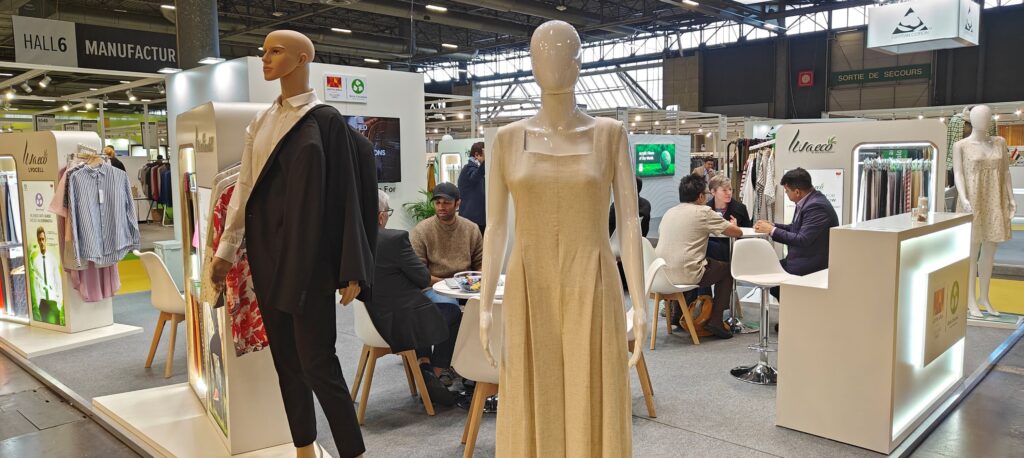
The second pillar focuses squarely on sustainability. Under the Livaeco™ umbrella, Birla Cellulose offers Livaeco-Viscose, Livaeco-Modal, and Livaeco-Lyocell. In fact, all modal fibres from the company have now transitioned entirely to Livaeco-Modal, reinforcing its premium positioning in softness, comfort, and traceability. Lyocell, by design, is inherently sustainable, produced through a closed-loop process with significantly lower environmental impact.
The third pillar addresses circularity through recycled and next-generation fibres. In chemical recycling, Birla Cellulose’s Liva Reviva integrates cotton-rich pre-consumer textile waste with wood pulp, reducing dependence on virgin forestry resources. Complementing this is the newly introduced Liva Reviva M, a mechanically recycled fibre that blends lyocell fibre with cotton waste—without re-pulping—creating a true fibre-to-fibre recycled solution.
Advancing Circularity Through Strategic Partnerships
While large-scale textile-to-textile recycling is still evolving commercially, Birla Cellulose is actively accelerating progress through partnerships. A notable collaboration is with Circulose, under which pulp made from 100% textile waste is supplied to Birla Cellulose to produce viscose staple fibre for global brand partners.
This partnership strengthens supply chain resilience for recycled fibres and aligns with Circulose’s renewed strategy of deeper brand engagement and end-to-end value chain solutions. Birla Cellulose’s long-standing leadership in circular innovation , positions it as a key enabler of scalable textile recycling worldwide.
Innovation Beyond Sustainability: Performance and Functionality
Beyond circularity, Birla Cellulose continues to invest in functional innovations. Birla Spunshades represent Birla Cellulose’s dope-dyed range of viscose fibres that offer flawless drapes, impeccable fit, breathability while keeping you comfortable always. Our unique Colour-Lock™ technology makes fabric fade-resistant and ensures best in class colour consistency even over long periods of usage.
SAFR fibre is a sustainably produced inherently flame – retardant ( FR) cellulosic fibre. This fibre is 100% plant based, made from wood pulp, sourced from sustainably managed forests and manufactured in plants that adhere to highest global norms on environmental responsibility. The flame retardant SAFR fibres can be blended with other high-performance fibres to produce unique protective clothing solutions for a variety of industrial applications where it does not compromise on the product performance of protection against fire and at the same time provides breathability and comfort preventing heat stress.
Another notable innovation is Intellicolor, a breakthrough in the process of dyeing using cationic or basic dyes, reducing the dye input and enabling up to 95% dye bath exhaustion. The process helps achieve brighter shades with high tinctorial value and color depth compared to reactive dyes with the same concentration of dyes. The process also stands out for its lower impact on environment.
| FY25 | Key Milestones Achieved • ‘Dark Green Shirt’ leadership in Canopy’s Hot Button Report — 6th consecutive year • 55% reduction in water consumption vs FY15 — surpassing our 2030 target ahead of schedule • 49% reduction in Sulphur-to-air emissions, driven by closed-loop and EU BAT-aligned technologies • 5 of 7 MMCF sites EU BAT compliant • 99%+ certified sustainable wood sourcing; continued deforestation- and conversion-free commitment • 80 key suppliers assessed, covering ~70% of procurement spend, strengthening ESG alignment • 2,500+ global value-chain partners onboarded, accelerating transparency, adoption, and impact Looking Ahead | Our 2030 Commitments • 50% reduction in GHG emissions intensity by 2030; Net Zero by 2040 • EU BAT implementation across all fibre sites by 2027 • 20% further reduction in specific water consumption by 2030 • Scaling circular fibres using pre- and post-consumer textile waste • Biodiversity assessments across all Indian sites by FY27 |
A Globally Integrated Manufacturing Footprint
Birla Cellulose operates one of the most strategically diversified manufacturing networks in the MMCF industry. Fibre production facilities are spread across India (four sites), Indonesia, China, and Thailand, while pulp sourcing is supported by integrated operations in Sweden and Canada. This configuration enables the company to serve major manufacturing hubs rather than just consumption markets.
India, however, is emerging as a dual hub—both for domestic consumption and as a global sourcing base. A significant share of Birla Cellulose’s total output is consumed within India, with the balance catering to global markets. Planned capacity expansion in lyocell further underlines the company’s growth confidence, driven by rising demand for biodegradable and comfort-driven fibres.
Strategic Capacity Expansion in Lyocell to Power the Next Phase of Sustainable Growth
Further reinforcing its long-term commitment to sustainable fibre leadership, Grasim Industries is currently setting up a major 110 KTPA Lyocell fibre project at Harihar, Karnataka. The project will be developed in phases, with Phase 1 comprising 55 KTPA capacity and an estimated investment of approximately ₹1,350 crore. Commissioning of the first phase is targeted for mid-2027. This expansion is strategically aligned with the rapidly growing global demand for sustainable and biodegradable fibres, and will significantly strengthen Birla Cellulose’s position in the high-growth lyocell segment, further consolidating India’s role as a key manufacturing hub for next-generation MMCF solutions.
Why Global Brands Choose Birla Cellulose
In a competitive MMCF landscape that includes players from Europe and China, Birla Cellulose differentiates itself through compliance, credibility, and consistency. The company has earned the highest “Dark Green Shirt” rating for six consecutive years in Canopy’s Hot Button Report, reflecting leadership in responsible forestry, transparency, and NextGen solutions.
Equally important is Birla Cellulose’s philosophy of “doing sustainability in reality, not just in rhetoric.” With captive forestry initiatives, stringent supplier audits, and large-scale investments in closed-loop technologies, sustainability is embedded across operations. Five of our facilities have achieved EU BAT compliance , in India ( Vilayat & Kharach) , China (Birla Jingwei Fibers ) , Indonesia ( Indo Bharat Rayon ) and Thailand ( Thai rayon Ltd) , setting global benchmarks in sulphur recovery, water consumption, and emissions control.
Deep Engagement Across the Value Chain
Although Birla Cellulose operates as a B2B fibre supplier, its engagement mirrors that of a consumer-facing brand. The company works closely not just with spinners, but also with fabric manufacturers, garmenters, brands, and even end consumers. Its global network of application and innovation studios—in New York, Tirupur, Noida, Surat, Jaipur, and other hubs—serve as open platforms for value chain partners to co-create collections and solutions.
Through deep engagements ,brand pitches, and transparency initiatives, Birla Cellulose has achieved many milestones & global brands now publicly acknowledge fibres from Birla Cellulose .
FTAs, India’s Opportunity, and the Shift Beyond Cotton
Trade agreements with the EU, the US, and other regions are reshaping sourcing strategies, and Birla Cellulose sees these developments as transformational for India. According to Mohapatra, India must now accelerate its transition from being primarily a yarn and fabric supplier to a vertically integrated garment manufacturing hub.
Equally critical is the need to move beyond cotton. As global fashion pivots toward comfort wear, athleisure, and casualisation, MMCF and blended fibres will become indispensable. Product innovation, rather than price-led competition, must be India’s primary differentiator—especially to penetrate demanding markets such as Japan.
Sustainability, he emphasises, must shift from intention to execution. With regulatory compliance tightening across Europe and the US, sustainability can no longer be optional; it must be embedded into product development, investments, and long-term strategy.
Birla Cellulose’s presence at Première Vision Paris underscored a broader narrative: the future of textiles lies at the intersection of comfort, circularity, and credible sustainability. With a robust product portfolio, global manufacturing footprint, and deep value chain engagement, Birla Cellulose is positioning itself not just as a fibre supplier, but as a strategic partner to the global fashion industry.
As India stands at a once-in-a-generation opportunity to redefine its role in global textiles, Birla Cellulose’s message is clear—success will belong to those who prioritise product innovation, vertical integration, sustainability, and a decisive move beyond cotton.