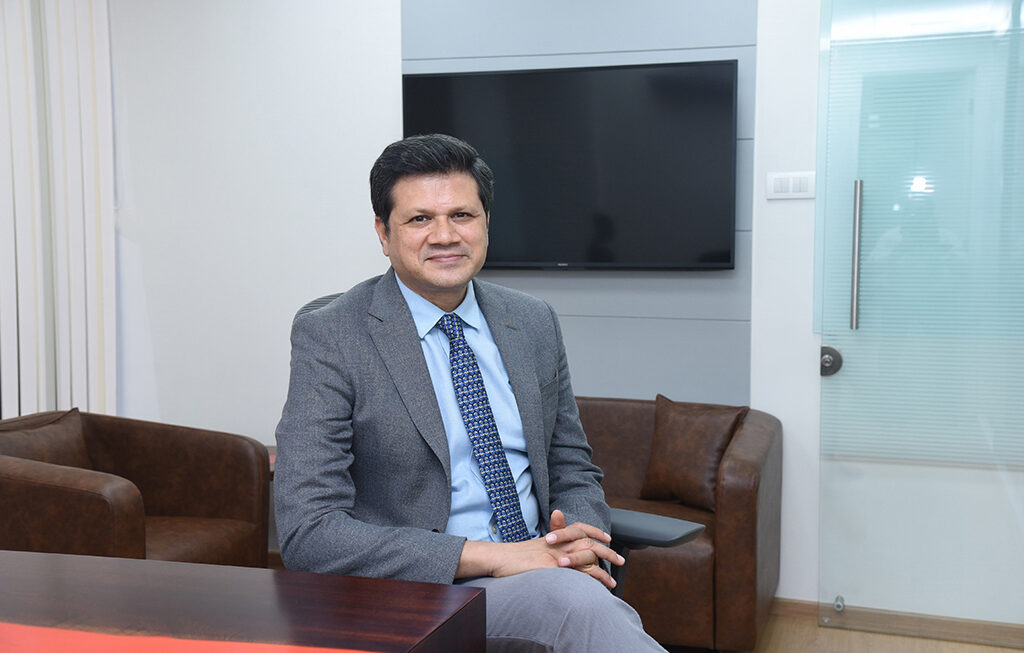









At the Cascale Annual Meeting 2025 in Hong Kong, MAS Holdings Group Chief Executive Officer Suren Fernando shared reflections on why sustainability must move from the sidelines to the very centre of business strategy. His message was clear: in a volatile world, sustainability is no longer optional. It is the catalyst for resilience, innovation, and leadership.
Taken from his speech, here are seven principles MAS has learned over nearly four decades of keeping sustainability at the heart of business.
- Driving Change from the Top
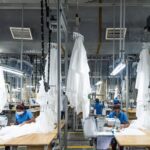
From its earliest days, MAS was built on the conviction that apparel manufacturing could be different from what it was. In the 1980s, when the industry was often associated with poor working conditions, the founders chose a new path: factories with air conditioning, meals, transport, lodging, and training for associates—particularly women—at a time when this was unheard of.
This philosophy went global. When MAS expanded overseas, the company carried these values with it, even when others resisted. In one region, offering free meals and transport was criticised for “spoiling” workers and raising costs. MAS held firm. Today, these same benefits are standard practice across the area.
Doing the right thing has always been a strategic choice even in difficult times, from financial crises and political instability to pandemics. As Suren explained, “The fact that our business strategy and sustainability strategy have always been intrinsically linked is the reason we’re still here today.”

- Purpose at the Core
MAS’ purpose—to be changemakers, enabling dreams and enriching the fabric of life on our planet—acts as its North Star. That purpose prompts tough but necessary questions: Does this align with the future we believe in? Does it honour the people behind our products? Does it enrich rather than extract? This clarity has shaped real action. MAS’ women’s empowerment programme, launched over 20 years ago, has broken down barriers for the 70% of its workforce who are female. Addressing cultural, social, and economic constraints, this project named Women Go Beyond has created over 5.5 million opportunities for women. It is an example of why MAS sees itself not only as an apparel manufacturer, but as a changemaker shaping a better future for all its stakeholders.
- A Formal Approach to Strategy
Sustainability at MAS is treated with the same rigour as business strategy. Through horizon scanning, stakeholder engagement, and double materiality assessments, MAS identified where risks and opportunities intersect with financial performance, society, and the environment. This created clear, measurable goals and avoided the trap of aspirational but empty commitments. At MAS, sustainability targets are data-driven, tracked, and aligned with customer and business priorities.
- Learning and Building Capability
One of MAS’ greatest strengths is the expertise of its people: homegrown leaders who have learned and grown with the company. Rather than waiting for global best practices to emerge, MAS invested in the capacity of its own workforce.
This fluency, built on lived experience, bridges the gap between strategy and operations. It also recognises that mistakes are not failures- they are proof of trying and learning.
A striking example is the Thurulie plant, MAS’ first purpose-designed green facility. While lauded internationally as a success, it also revealed costly missteps, like an evaporative cooling system unsuitable for an environment focused on lingerie production. Those lessons became catalysts for smarter, more informed decisions going forward.
- Partnerships for Scalable Solutions
Partnerships are vital. Yet, as Suren noted, not all organisations are at the same point on their sustainability journey, and that’s okay. What matters is being intentional: choosing partners who share a belief that sustainability is a driver of resilience, not a trade-off.

MAS’ partnership with HeiQ and Ambercycle are proof of this. By investing in HeiQ’sAeoniQ™ yarn and securing offtake agreements with Ambercycle’s recycled polyester, MAS is building a pipeline of sustainable raw materials for global brands. In each case, MAS connects cutting-edge innovation with scalable manufacturing- turning ideas into products that deliver real impact.
- Holding Steady Through Disruption
The past few years have tested businesses everywhere. From the pandemic and economic volatility to raw material shortages, MAS has had to balance pragmatism with purpose.
In those moments, the company asked: What are the non-negotiables? What must be protected, no matter what? The answers were clear: worker dignity, safe working conditions, environmental commitments, and transparency with partners.
By protecting fundamentals while adapting where necessary, MAS navigated crises without losing sight of its long-term goals. Suren reminded the audience: “Leadership during challenging times is not just about survival, but about making sure we emerge stronger and more determined to deliver on the future we’ve committed to.”

- Staying the Course
Sustainability is a long journey, and for some, as it should be- a personal one. MAS’ sustainability strategy, the Plan for Change embeds sustainability into leadership KPIs and everyday decision-making. This level of commitment and consistency, even during the hard times, has built a foundation of trust with MAS’ brand partners. In closing, Suren emphasised that knowing what’s at stake, inaction is a choice that we can no longer afford.
“In today’s world, we don’t need more perfect strategies. We need more courageous leaders; leaders who are willing to think long term in a short-term world.”
He reminded the audience that manufacturers and brands sit at a critical intersection. How we engage and share responsibility, the values we prioritise in moments of pressure will determine not just how we navigate the next few years, but what kind of industry we build in the decades to come.