
-150x150.jpg)







What was once confined to the gym is now a lifestyle. Here is how a trillion-dollar industry is quietly rewriting the rules of fashion, retail, and consumer culture.
By T. Murrali
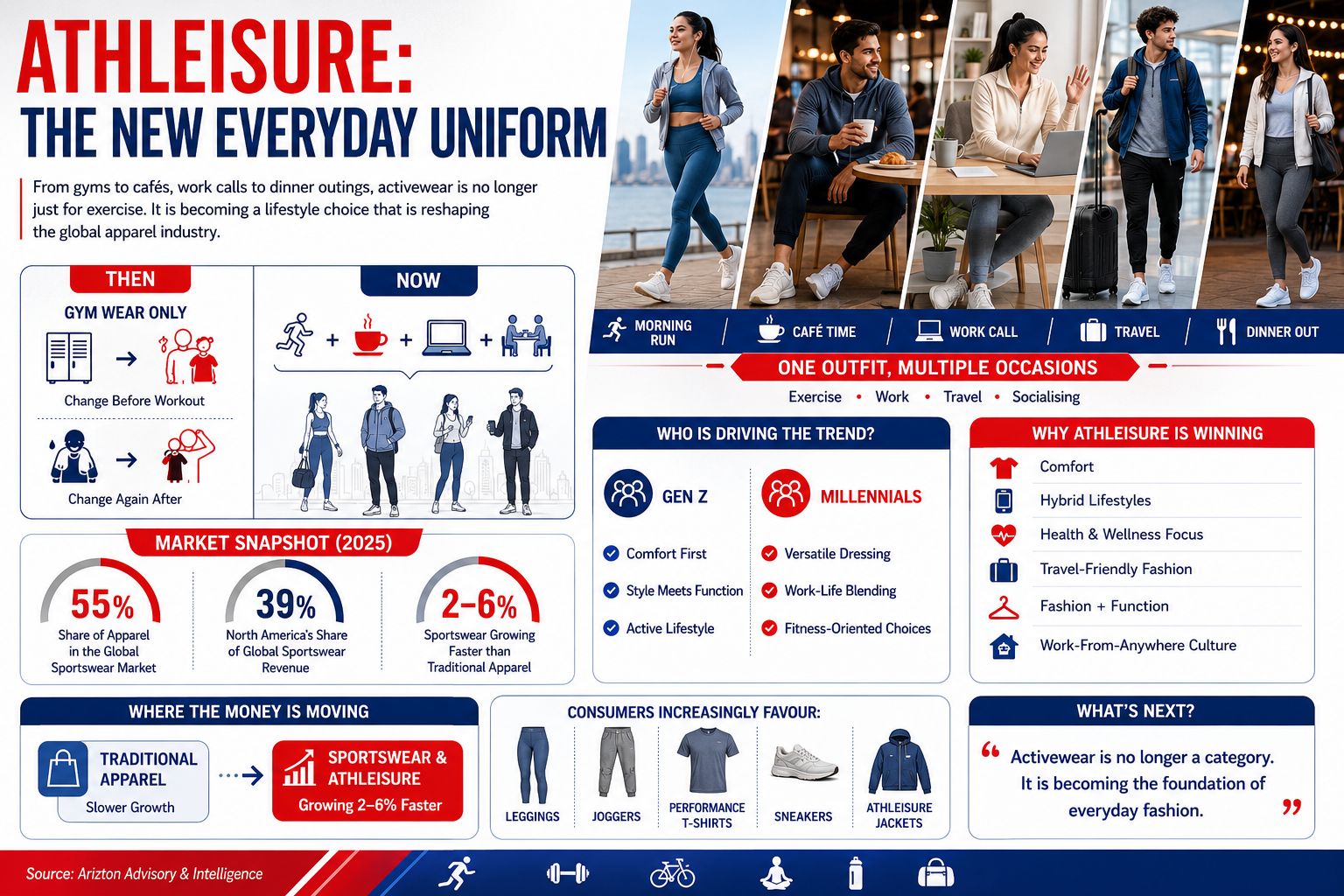
There was a time when people changed clothes before heading to the gym and changed back after. That habit is fading fast. Today, the same leggings worn for a morning run might also show up at a café, a work call, or a dinner out. This shift — broadly called athleisure — is not just a fashion trend. It is a fundamental change in how people think about getting dressed, and it is reshaping where apparel money goes.
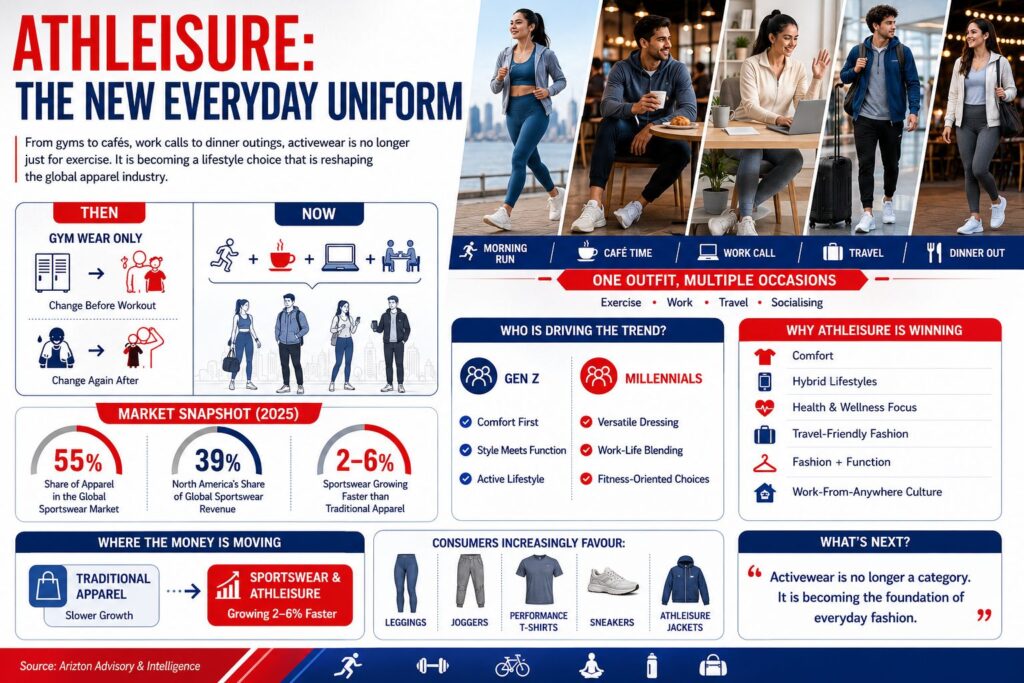
Younger consumers, particularly Gen Z and Millennials, are driving this charge. For them, activewear is everyday wear, something they factor into their daily outfit just as naturally as any other clothing. Brands have noticed that sportswear is now growing 2–6% faster than regular apparel in major markets like North America, Europe, and China. According to the recent report by Arizton Advisory & Intelligence, the global sportswear market size is projected to reach $ 531.42 billion by 2031, growing at a CAGR of 4.04% during the forecast period. The apparel segment alone accounted for around 55% of the total sportswear market in 2025, with North America holding a 39% share of global revenue — and those numbers are only expected to climb.
Going Green
Sustainability used to be a footnote in annual reports. Now it is a boardroom priority. Nearly three in four Gen Z consumers say sustainability influences what they buy, and sportswear brands are scrambling to keep up. Recycled materials, ethical sourcing, greener factories, and circular product design are moving from good intentions to competitive strategy. The pressure is not just coming from customers. European regulations are tightening, making it harder for fast-fashion models to survive. In April 2026, the UK launched its Sustainable Sports Apparel Charter, pushing brands to cut oversupply and rethink how much they produce in the first place. The brands that adapt earliest stand to gain the most — not just in reputation, but in the loyalty of a generation that shops with its values, the report noted.
Selling Direct, Earning More
For decades, sportswear brands relied on large retailers to put their products on shelves. That model still works — wholesale continues to dominate distribution globally, giving consumers access to many brands in one place. But a quiet revolution is underway. Brands are increasingly selling directly to consumers through their own websites, apps, and stores. The math is compelling: going direct can improve margins by 15–25%. But it is not just about money. Selling direct means owning the customer relationship — knowing what people buy, how they shop, and what keeps them coming back. That data is fast becoming one of the most valuable assets a sportswear brand can hold, turning DTC from a sales channel into a long-term brand-building engine.
New Markets, New Momentum
North America remains the world’s largest sportswear market, but mature does not mean stagnant. The focus there has shifted from volume to value — premium products, smart fabrics, and sustainable materials are driving spending as consumers upgrade rather than just replace. The 2026 FIFA World Cup is expected to add a significant short-term boost through licensed kits, merchandise, and fan gear. The more exciting growth stories, however, are playing out in Asia-Pacific and South Asia. Rising incomes and growing health awareness are turning these regions into the next frontier for premium sportswear. Lululemon’s planned entry into India through a franchise deal with Tata CLiQ by end of 2026 captures this momentum perfectly — a global premium brand betting on an emerging market it could no longer afford to ignore.
Deals Shaping Tomorrow
Three recent moves tell the story of where the industry is headed. In March 2026, Nike and LEGO expanded their partnership with the Air Max 95 x LEGO Collection, blending sportswear with collectible culture and signalling how limited-edition drops are becoming a serious brand and revenue strategy — not just a marketing stunt. Around the same time, Adidas launched the Supernova Rise 3 Adaptive, a performance shoe co-developed with para-athletes. It marks a broader industry move toward inclusive design — treating accessibility not as charity but as a commercial opportunity with real market potential. And then there is Lululemon’s India entry, which reflects how South Asia is rising fast on every premium brand’s global expansion map. Together, these moves paint a picture of an industry that is innovating on multiple fronts at once — culture, inclusivity, and geography — all at the same time.