


-150x150.jpg)






What began as a modest Khadi store with just a few yards of fabric on the shelf is today a textile juggernaut exporting millions of garments around the world. SCM Group, a cornerstone of the The Chennai Silks group empire, has transformed from a family-run venture into a globally respected name, where cutting-edge automation meets age-old values, and tradition fuels innovation. India’s largest exporters of hosiery garments, SCM isn’t just in the business of fabric—it’s in the business of making history.
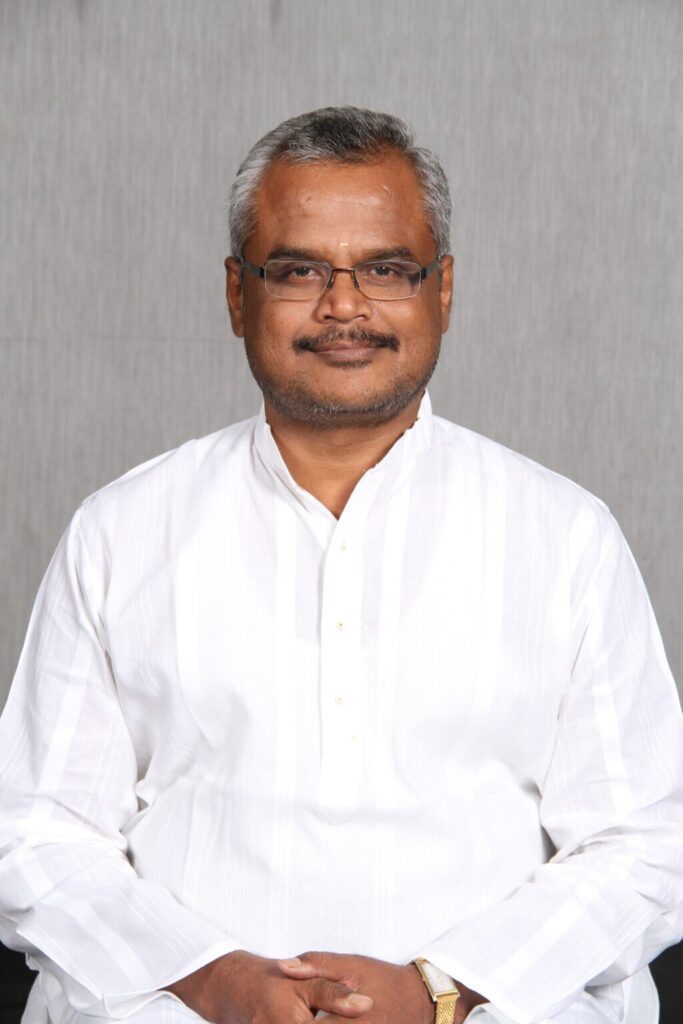
To find out the story behind the phenomenal rise, our editorial team met with T.K. Chandiran, Chairman.
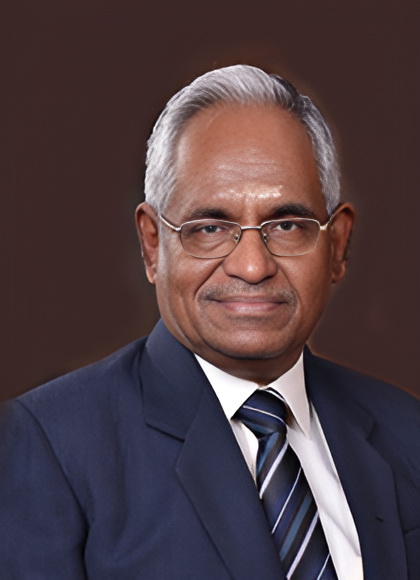
Space Textiles Pvt Ltd Group Managing Director K. Vinayakam his Son V. Vikram Narayen, the young and dynamic Executive Director of the Group; and P. Sudhakar,CEO of SCM Textile Spinners, at the bustling Chennai Silks showroom on Coimbatore’s iconic Cross-Cut Road.
Humble beginnings
“Our family’s roots in spinning and weaving go back to my grandfather’s days in Avinashi, near Tirupur,” reminisced Chandiran. “It all started with the Khadi movement. In 1962, my father, a dedicated nationalist and spinner, moved to Madurai and started Kasthuribhai Khadi Vasthralayam—a modest Khadi retail outlet.” 64 Years Anniversary.
While sales were modest at first, diversification into village industries in 1962—including incense stick Manufacturing—marked the start of exponential growth. “Retail was always our backbone,” Chandiran reflected. “We began with Khadi and handloom products. But in 1991, with the launch of Kumaran Silks in Tirupur, we transitioned into silk—moving from the ‘king of fibers’ to the ‘queen of fibers.’ Today, The Chennai Silks operates 25 retail outlets across South India, supported by a strong ecosystem of manufacturing and logistics.
A family united
Perhaps the most unique aspect of the group is its governance. “Our greatest strength has been our unity,” said Chandiran with pride. “The business is run by eight brothers, Four sisters, and their children—130 family members managing different verticals. This shared ownership and Trust have been the foundation of our growth.” Honesty & Hard work is our “Motivation”.
Manufacturing might
From retailing to becoming a vertically integrated manufacturing giant, the group’s evolution has been nothing short of remarkable. “We started our first fabric processing unit in Erode in the mid-1985s,” shared Vikram. “In 1989, we launched SCM Garments. In 1992, we made our first global mark by exporting two lakh T-shirts. Spinning operations began in 2003, completing our vertical integration journey—from fiber to finished garment.”
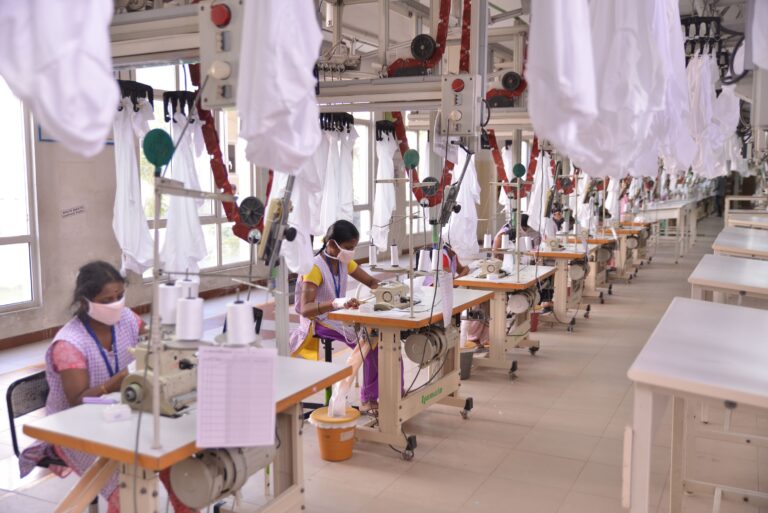
Today, the group operates 170,000 spindles across five locations, producing 130 tons of yarn daily, including 100 tons of cotton and 30 tons of viscose yarn. Its flagship unit in Thekkalur is a marvel of modern automation with 72,000 spindles and 20 vortex machines—a “touch-free” factory where automation has drastically reduced labor dependency.
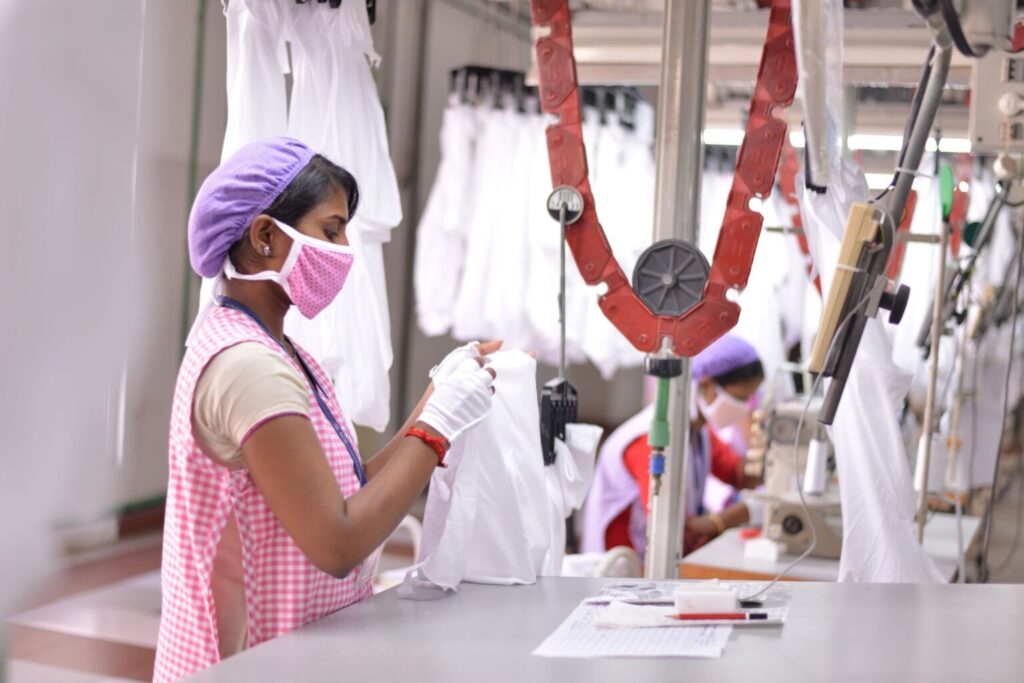
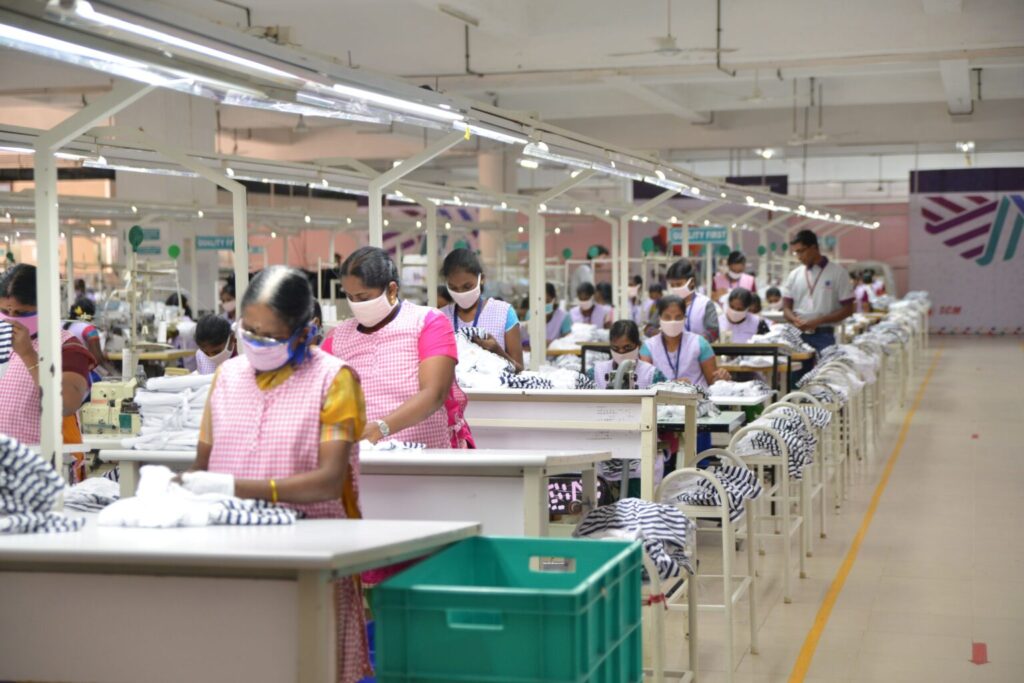
SCM Group is now India’s second-largest exporter of hosiery garments. “We’ve been a strategic partner for Decathlon for over a decade,” Vikram noted. “We also supply to global brands like Polo Ralph Lauren and Hanes.
Around 60–70% of our garments, fabrics, and yarn production is exported, with Europe, the US, Sri Lanka, and Bangladesh being key markets.” Sudhakar added, “We operate 220 knitting machines with a capacity of 60 tons per day and a dyeing capacity of 80 tons. Nearly 40% of our yarn is used in-house, while the rest goes to the market.”
Commitment to sustainability
Sustainability isn’t a buzzword for SCM—it’s a business imperative. “We are 100% off-grid,” said Vikram. “Our dyeing unit is zero liquid discharge (ZLD) compliant and recycles 95% of its water through advanced RO systems and Membrane Bio Reactor (MBR) technology. SCM Garments is also chemical-free in water treatment.” SCM has also adopted circular practices. “We repurpose cut waste into recycled yarn and incorporate recycled polyester. About 90% of our products now use sustainable raw materials, including Better Cotton Initiative (BCI) and organic cotton.” Their sustainability commitment was recognized recently when the Apparel Export Promotion Council awarded them for “Best ESG Practice.”
Brick and mortar still rules
Despite the rise of e-commerce, SCM believes in the enduring appeal of physical stores. “Our retail-to-manufacturing ratio is around 70:30,” said Chandiran. “This is a touch-and-feel industry. Online Platforms haven’t affected us much. Remember, we hold the “Guinness World Record” for the costliest saree ever sold—diamond and gold-studded, featuring Raja Ravi Varma’s artwork.”
Stability through relationships
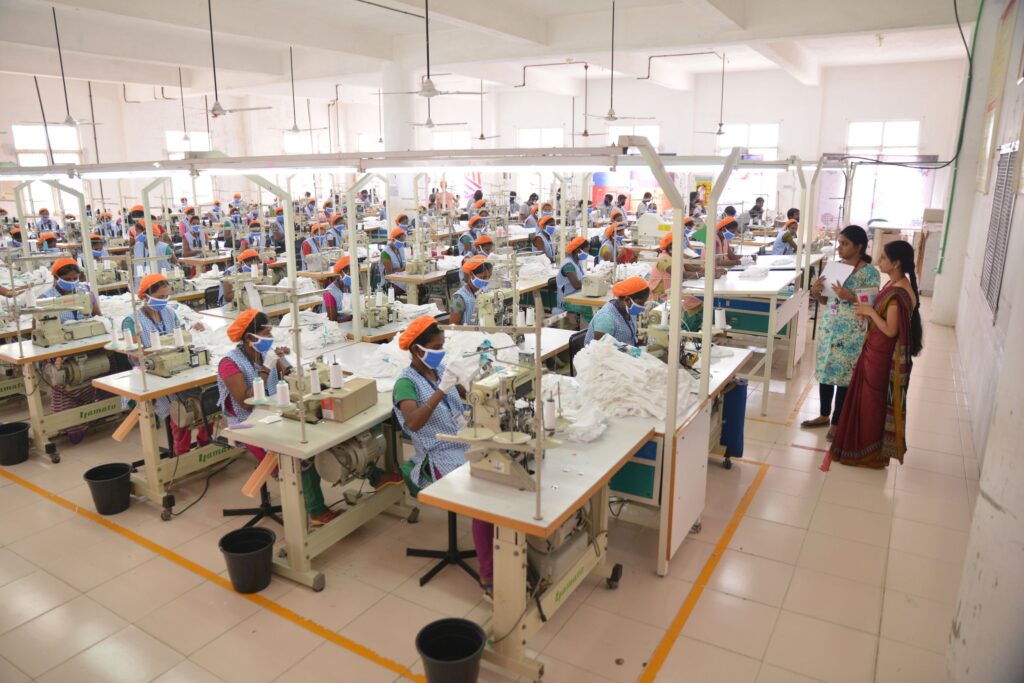
One of the group’s greatest strengths is its enduring relationships with clients and customers. “We don’t chase markets. That’s why we’ve grown steadily, even during volatile times,” Vikram stated. “Most of our factories are nominated by globally renowned brands. We enjoy a high level of trust.”
Diversified strengths
SCM’s diversification spans industries. “We also have a company that builds precast buildings, in the name of “Teemage Precast” Vikram shared.“Our Coimbatore of 1 Lakh sqft showroom was constructed in just 28 days by our construction wing.”
Deeply rooted CSR
SCM’s commitment to the community is unwavering. “We operate a hospital in Avinashi offering subsidized care for just ₹40 and free services for the underprivileged,” said Vikram. “We also run a CBSE school in Avinasi in the name of Sri Nachammal Vidyavani. Our vision is to provide an integrated ecosystem—work, education, and healthcare—for our workforce. We have employees from 18 states.”
The India edge
Both Chandiran and Vikram are bullish on India’s textile future. “With political stability, technical know-how, and raw material availability, India has an edge,” said Vikram. Chandiran added, “Yes, Bangladesh and Vietnam are good at mass manufacturing, but when it comes to highvalue, technically advanced products, India shines. The ‘China Plus One’ strategy is bringing more inquiries our way. But we need to improve scalability to meet billion-piece orders like China can.”
Looking ahead
The group’s future is equally ambitious. Plans are in place to enter the home textiles segment by 2026 and expand further into the woven apparel category. “Apparel remains our largest category. With proposed Free Trade Agreements (FTAs), especially with the UK, we foresee a strong growth phase,” Vikram said. “We already have global partnerships in place, and India remains a preferred sourcing destination.”