







Exclusive Interview by K. Gopalakrishnan
Amid one of the most turbulent global business cycles in recent memory, Himatsingka has chosen clarity over urgency and depth over haste. Rather than chase growth for optics, the company has pursued a strategy rooted in consolidation, operational discipline and future-focused investment across manufacturing scale, digitalisation and market alignment. As the organisation enters 2026 and prepares for Heimtextil in Frankfurt, its trajectory reflects a decisive reorientation toward resilience, readiness and renewed global expansion.
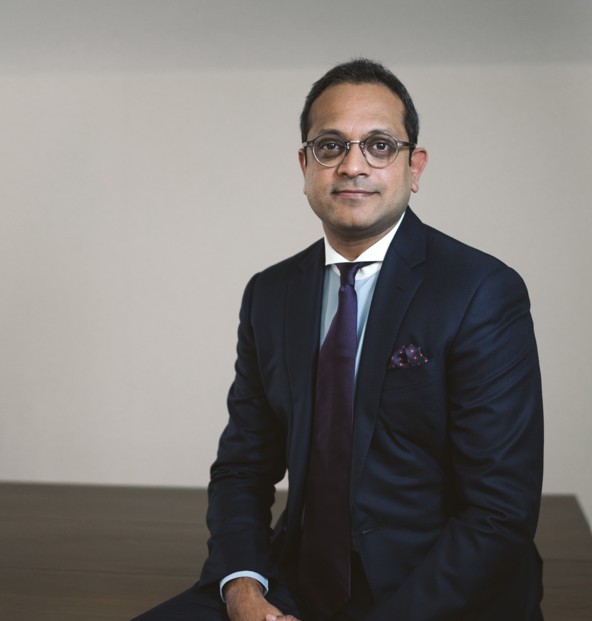
Mr. Shrikant Himatsingka, Executive Vice Chairman and Managing Director, articulates the year succinctly: “Our performance in 2025 has been range-bound, closely mirroring the macroeconomic realities of the markets we operate in. We centered our strategy around consolidation and preparedness. Our priority is to strengthen our foundation, protect our competitive position and build long-term stakeholder value.”
A Consolidation-First Strategy in a Disrupted World
The shifting tariff regimes, secondary shocks to supply chains and persistent global economic pressures demanded more than tactical adjustments. For Himatsingka, the response was structural.
“We are managing through a complex environment shaped by rapidly evolving trade dynamics. Our response is disciplined and deliberate. The goal is not to chase short-term highs but to reinforce our readiness so that when the global cycle turns, we are positioned to move with strength and clarity,” explains Shrikant.
This mindset defines Himatsingka’s approach to capacity utilisation, market protection and capital deployment through 2025. Every decision aligns with a larger mandate: to emerge from the volatility sharper, more agile and better calibrated for scale.
Scale as Strategic Foundation, Not a Decorative Asset
Himatsingka operates among the world’s largest manufacturing capacities across Sheeting, Terry Towels, Upholstery, Drapery and Spinning. However, Shrikant reframes this scale not as a triumph but as a threshold requirement.

“In the current global supply paradigm, scale is not a differentiator. It is the entry ticket. Any partner working with large-format retailers must demonstrate infrastructural credibility and delivery assurance at a global level. Our scale represents the operational hygiene needed to be taken seriously in the international marketplace.”
This infrastructure gives Himatsingka the latitude to support international clients with stability, continuity and the ability to manage multi-category programs without compromising quality, speed or consistency.
Vertical Integration and the Fiber-to-Shelf Advantage
Few companies globally are able to maintain full visibility from fiber sourcing to finished product. Himatsingka’s fiber-to-shelf architecture enables complete chain-of-custody control, resulting in faster lead times, predictable quality, rapid design-to-market cycles and a fundamentally more transparent supply partnership for retailers.
“Our vertical integration safeguards predictability and fuels responsiveness. It allows us to anticipate and respond to market movement with precision. Integration is more than a process advantage; it is a strategic shield that protects quality and a springboard that accelerates innovation,” states Shrikant.
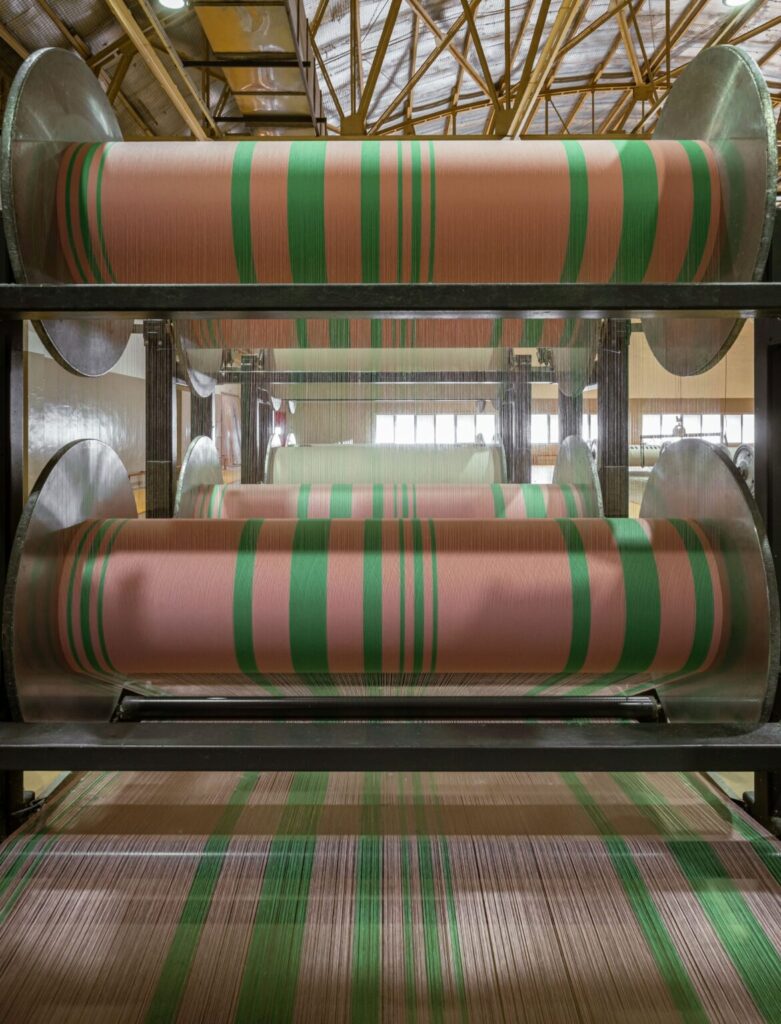
In an era where traceability is transitioning from an expectation to a compliance requirement, this advantage is becoming pivotal.
Flexible Manufacturing for a Fragmented and Fast-Shifting Market
The company’s manufacturing philosophy is anchored in versatility. Multi-product capability, modular production lines and engineering for pivot-ready operations allow Himatsingka to adapt to demand waves without structural disruption.
“Our facilities are not designed only for scale. They are engineered for transformation. We can realign production priorities, deepen product portfolios and react at high speed to emerging retail directions. Flexibility is the currency of the modern textile world and we have invested deeply in acquiring it,” adds Shrikant.
This flexibility ensures relevance across regions, consumer profiles and retail formats, especially as design cycles contract and demand forecasting becomes increasingly uncertain.
Global Expansion with Geographic Balance
Himatsingka is present in 38 countries and is now amplifying focus across Europe, the Middle East and Africa, and high-growth Asia-Pacific markets. The Indian domestic market also emerges as a critical growth pillar.
“With Himeya, Atmosphere and Liv, we see strong tailwinds in India. The domestic market will evolve into a meaningful driver of revenue and brand value for our group. We expect the Indian portfolio to accelerate significantly in the coming years,” he affirms.
This multi-jurisdictional expansion is designed to balance exposure, mitigate risk and reduce dependency on legacy markets.
Technology and Digitalisation as Structural Levers
The organisation’s digital transformation reflects a shift from automation as a function to automation as a doctrine. Industry 4.0 systems, real-time data intelligence, integrated traceability platforms and digital manufacturing controls are now embedded in the company’s operating fabric.
“We have moved decisively beyond convention. The digital backbone we have built gives us visibility, traceability and predictability at a level that is non-negotiable for global retailers. Our decision-making is data-driven and our quality assurance is systematic, not episodic,” notes Shrikant.
This digital ecosystem fortifies the company’s ability to scale without trade-offs and supports customer trust through measurable transparency.
Himatsingka at Heimtextil 2026
Heimtextil 2026 represents a strategic stage for global engagement. Himatsingka’s showcase will spotlight bedding and bath, technology-driven traceability, sustainability frameworks and its integrated manufacturing capability.
“We are approaching Heimtextil 2026 with intent. The objective is to reinforce our leadership positioning, deepen our dialogue with European and international partners, and showcase the next chapter of our capabilities. We will present not only our products but the architecture that enables them, from sustainability platforms to digital oversight mechanisms,” concludes Shrikant.
Himatsingka’s journey through 2025 is not defined by numbers alone. It signals a company that is not merely reacting to volatility but redesigning its competitive posture for the next decade of global trade.
Armed with scale that meets global thresholds, integration that accelerates responsiveness, digital systems that deepen credibility and a calibrated market strategy, Himatsingka is entering 2026 with clarity of purpose. Heimtextil is not the destination but the signal: the organisation is ready to move from resilience to resurgence, and from consolidation to strategic expansion.