





By K. Gopalakrishnan
As sustainability regulations become more stringent and global brands intensify their focus on responsible sourcing, the textile industry is undergoing a fundamental shift towards safer, bio-based and environmentally responsible chemical solutions. Traditional antimicrobial and odour-control technologies based on heavy metals and biocides are increasingly coming under regulatory scrutiny, creating significant opportunities for innovative alternatives that deliver both performance and sustainability.
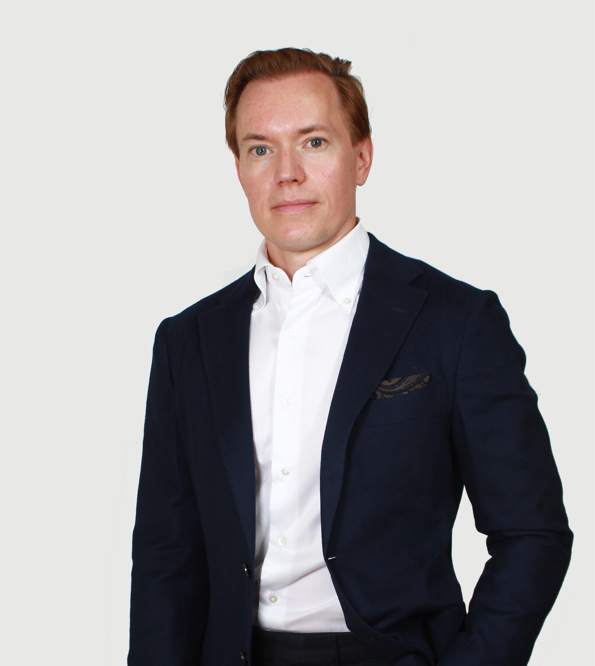
At the forefront of this transition is NORDShield, the Finland-based innovator that has developed a portfolio of bio-based textile performance technologies derived from renewable forest byproducts. Through its flagship solutions—CRISP®, CiTex® and BioLayr®—the company is redefining odour control and antimicrobial protection while eliminating the need for heavy metals, PFAS and conventional biocides. Under the leadership of Mr. Paul Wasastjerna, CEO, NORDShield, the company has rapidly expanded its global footprint through strategic partnerships, advanced product innovation and a growing presence across Asia. In this exclusive interview with The Textile Magazine, Mr. Wasastjerna discusses NORDShield’s technology leadership, the changing regulatory landscape, opportunities in India and the company’s vision for building a more sustainable future for the global textile industry.
NORDShield’s journey, milestones and vision
NORDShield was founded on a straightforward but ambitious premise: that the textile industry’s reliance on heavy metals and biocides for odour control and antimicrobial solutions is neither sustainable nor necessary. We set out to prove that bio-based, nature-derived chemistry could deliver equivalent or superior performance, and I believe we have done exactly that.
In Finland where NORDShield is founded and based, about 75% of the land area is forested, making it the most densely forested country in Europe. It’s one of the reasons Finland has a strong forest industry tradition, and incidentally why NORDShield’s wood-derived, forest byproduct-based chemistry is a natural fit for a Finnish company.
Our key milestones include launching a biocide free odo control product which has been one of the main objectives of NORDShield. Equally important are the milestones of achieving bluesign® approval, OEKO-TEX ECO Passport certification and ZDHC MRSL 3.1 Conformance Level 3 for our CRISP® technology, as well as the USDA Certified Biobased Product label, recognitions that carry real weight with brands and buyers. We have established partnerships across Asia, launched into the laundry detergent segment, and most recently made a significant breakthrough in formulation efficiency, boosting performance even further. That last point is not just a technical milestone, it changes the commercial conversation entirely.
Looking ahead, our vision is to become the reference standard for bio-based odour control and antimicrobial performance in textiles globally. We come from a small Nordic country, but we are operating at the frontier of where the industry needs to go.
Sustainability regulation and consumer expectations shaping demand
The regulatory tailwind behind what we do is stronger than at any point in our history. PFAS restrictions, ZDHC requirements, the EU’s ban on silver zinc zeolite, the proposed EU hazard classification for silver chloride , the EU Green Deal and its impact on textile chemicals, and the growing number of brands with public commitments to eliminate heavy metals from their supply chains, all of this is creating structural demand for alternatives like ours.

But I would caution against thinking this is purely a compliance story. Consumer expectations are running ahead of regulation in many segments. Shoppers in apparel and home textiles are increasingly asking what is actually in the finishes on their garments, and brands are responding. We are seeing serious conversations with major names that would not have been possible a few years ago.
NORDShield’s role is to make the transition easy. We are not asking brands or mills to compromise on performance or price competitiveness, we are offering them a credible, certified, commercially viable path away from chemistry that is becoming harder to defend.
The value proposition of CRISP®, CiTex® and BioLayr®
I want to start by saying that I am truly proud of the products we have and the work our team has done in developing these technologies. Each of our three solutions addresses a distinct challenge, and together they give us a portfolio that covers the full range of what the market is asking for.

CRISP® is our flagship odour control solution, designed for both textile and laundry applications. It is bio-based, derived from forest industry byproducts, and entirely free of biocides, PFAS and heavy metals. When applied at the mill during textile production it delivers a long-lasting effect, neutralising odour-causing bacteria at the source rather than masking smells. It works primarily on cotton and man-made cellulosic fibres, but also on synthetics. For laundry detergent manufacturers it is a drop-in ingredient that enables genuine freshness and anti-odour marketing claims. In both cases, it gives brands a performance story and a sustainability story they can communicate with confidence.
CITEX® is our antimicrobial and anti-odour solution for fabric and fibre applications, with particular relevance for performance textiles and technical end-uses. Following extensive formulation work we have achieved world class efficiency and the technology now delivers effective, durable results. It is a mature, field-tested solution that competes directly with conventional alternatives on performance, while leaving their environmental liabilities firmly behind.
BIOLAYR® occupies a genuinely unique position in the market, it is the world’s first non-biocidal antimicrobial textile technology that works solely through a physical mode of action. Rather than using chemistry to kill bacteria, it forms an ultrathin molecular coating on textile fibres that physically blocks the conditions microbes need to grow, drawing on the natural protective properties of wood. It is biocide-free, heavy metal-free and fully biodegradable, and it finds its natural home in cellulosic and casual wear, home textiles, public space applications and footwear: segments where hygiene, longevity and sustainability credentials are becoming non-negotiable.
Advantages over silver and heavy metal-based technologies
The case against silver and zinc-based technologies is building on multiple fronts simultaneously, and I think that is what makes this moment important for companies like ours.
From a regulatory standpoint, silver-based biocides face increasingly stringent controls, especially under the EU Biocidal Products Regulation, and zinc ricinolate, widely used in laundry applications, is a heavy metal ingredient that sits uncomfortably against brand sustainability commitments. From a consumer safety perspective, there are legitimate questions about skin sensitisation and environmental persistence that are difficult to answer satisfactorily.
Our technologies carry none of those liabilities. They do not contain heavy metals. They are biodegradable and derived from renewable sources. They meet the most demanding certification standards in the industry. And critically, they perform. Performance equivalence used to be the question mark over bio-based alternatives. NORDShield has moved well past that.
The role of partnerships in NORDShield’s growth
We have built NORDShield on the principle that we cannot do everything ourselves, nor should we try. Our partnerships are genuinely strategic, they give us access to manufacturing expertise, regional market knowledge, distribution reach, and R&D capability that would take years to build independently.
Our partnerships in Asia are helping us navigate supply chains that are complex and relationship-driven in ways that require local credibility.
I see partnerships not just as a growth tool but as a model for how innovation in specialty chemicals should work. The problems we are solving, eliminating harmful chemistry from global supply chains, are too large and too urgent for any single company to address alone.
Strategy for Asia
Asia is where the textiles industry lives, and any company serious about scale in this sector has to have a credible Asia strategy. Ours is built around a combination of direct key account relationships with major mills and brands, and regional partnerships that give us market access and credibility we cannot build overnight.
We have been fortunate to build strong partnerships in East Asia, where we have active and established partner relationships. India is a priority for the next phase of growth, and here I want to highlight a decision I consider one of the most important we have made as a company: the recruitment of Vishal Bhandari as our Chief Growth and Technology Officer APAC based in India. Vishal brings deep knowledge of the Asian textile supply chain, strong existing relationships with mills and brands across the region, and the kind of on-the-ground presence that you simply cannot replicate from Helsinki, Finland. Having him embedded in the market has already accelerated conversations that would otherwise have taken years to develop, and his contribution to both our commercial pipeline and our technical development work has been invaluable.
India’s importance to NORDShield
India is one of our most important strategic priorities, and I say that not as a talking point but because the fundamentals are genuinely compelling. India has world-class textile manufacturing capability, a growing domestic performance and athleisure market, an export industry under increasing pressure from international brands to meet sustainability standards, and a chemistry and innovation ecosystem that is more sophisticated than it is often given credit for.
Having Vishal Bhandari based in India is central to how we are approaching this market. He understands the industry from the inside, has built relationships across the supply chain over many years, and brings a level of technical credibility that opens doors we could not otherwise reach. That changes the conversation entirely.
We are seeing real interest from Indian mills who understand that the direction of travel on textile chemistry is clear, and who want to get ahead of it rather than react to it. The technical textiles segment in particular, workwear, protective clothing, medical, is an area where bio-based antimicrobial performance has immediate and obvious relevance, and where Vishal’s technical background gives us particular strength.
Our ambition is to establish NORDShield as a meaningful player in India over the next two to three years, and with Vishal on the ground, backed by our full technical and commercial support from Helsinki, Finland, we have the foundation to make that happen.
Trends in customer demand and how we are adapting
The most important trend I observe is that sustainability and performance are no longer in tension in the minds of leading brands, they are the same requirement. Three years ago, a brand might have been willing to accept a modest performance trade-off for a better sustainability profile. Today, they are not. They want both, and they are right to demand both.
In sportswear and outdoor, we are seeing increasing specificity in what brands want from odour control, not just test results, but wash durability data, hand feel assessments, compatibility with other finishes, and evidence of real-world performance. Our formulation work over the past year has been directly shaped by this.
We are also seeing growing interest from footwear, which is a segment where odour control has historically been dominated by approaches that will face regulatory and consumer pressure. That is a significant opportunity for us.
Opportunities beyond apparel
The honest answer is that the addressable market beyond apparel is larger than apparel itself, and we are only beginning to explore it seriously.
Home textiles is an obvious adjacency, bedding, towels and upholstery all have odour control requirements that current solutions address imperfectly. The laundry detergent segment, where we have made our first commercial steps with CRISP®, is significant in its own right and has a different and in some ways simpler route to scale than the textile finish route.
Medical textiles is an area where the case for bio-based antimicrobial performance is arguably strongest, the regulatory direction around biocides in healthcare settings is clear, but the qualification timelines are long and the risk tolerance of buyers is low. We are watching this space carefully.
Automotive interiors and industrial textiles are longer-term opportunities that we think about at a strategic level. The performance requirements are well-defined, the sustainability pressure from OEMs is real, and the value per treated unit is attractive.
Strategic priorities for the next five years
Our priorities for the next five years are ambitious but grounded in what we know works.
We want to strengthen and expand our position in East Asia, where we have built real commercial momentum, while simultaneously establishing NORDShield as a go-to partner for the Indian market. These are not parallel bets, they reinforce each other
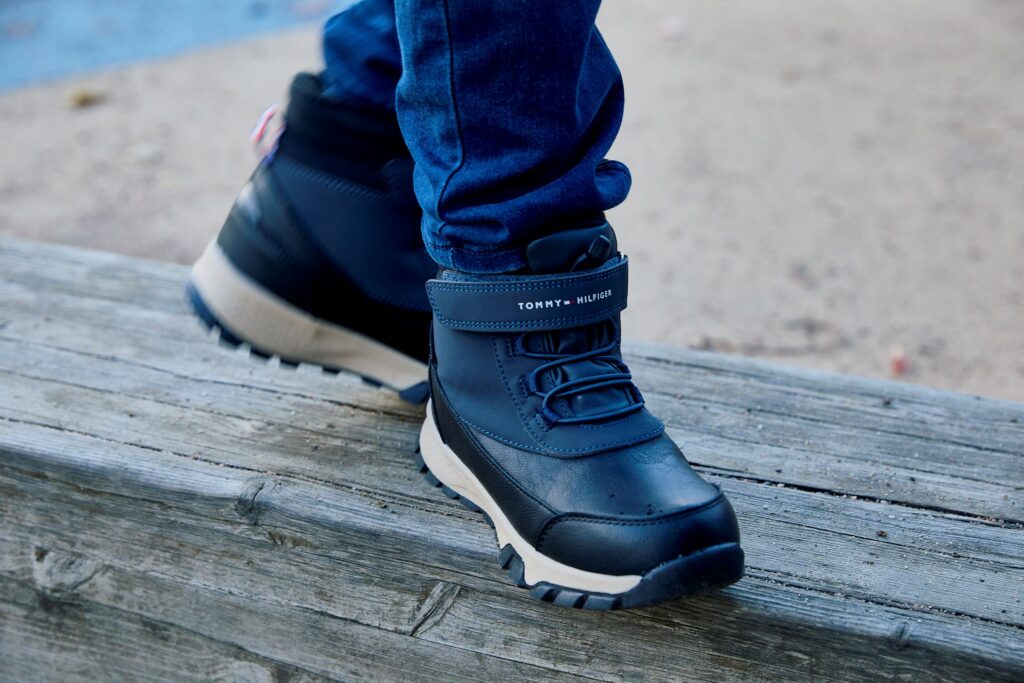
Growing our tier-one brand relationships is equally important. The fact that Tommy Hilfiger adopted our solution in 2025 and continues to do so is a statement about where the industry is heading, and we intend to build on that. When a brand of that stature chooses a bio-based alternative, it sends a signal to the entire supply chain. Our goal is to add more names of that calibre to our reference base and deepen the partnerships we already have.
We will also continue expanding into new application areas, with laundry detergents being the most immediate opportunity. The same performance logic that has resonated in textile finishes translates directly into this segment, and we are seeing genuine appetite from detergent manufacturers who want to offer consumers something meaningfully better.
Underpinning all of this is our commitment to staying close to our customers. Everything we do, every formulation improvement, every new application we explore, starts with listening. Our products perform at the level they do today because we have taken customer feedback seriously at every step, and that discipline will not change as we grow.