
-150x150.jpg)







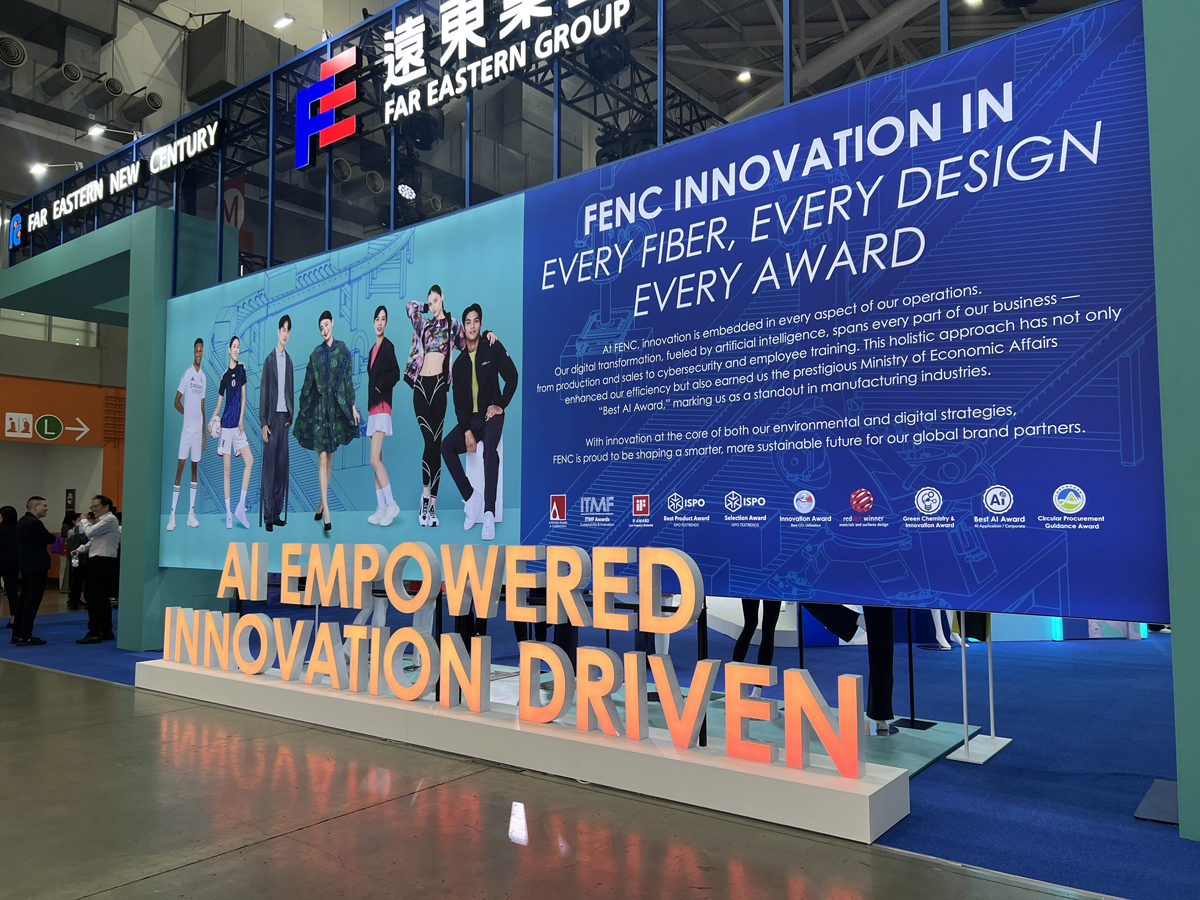
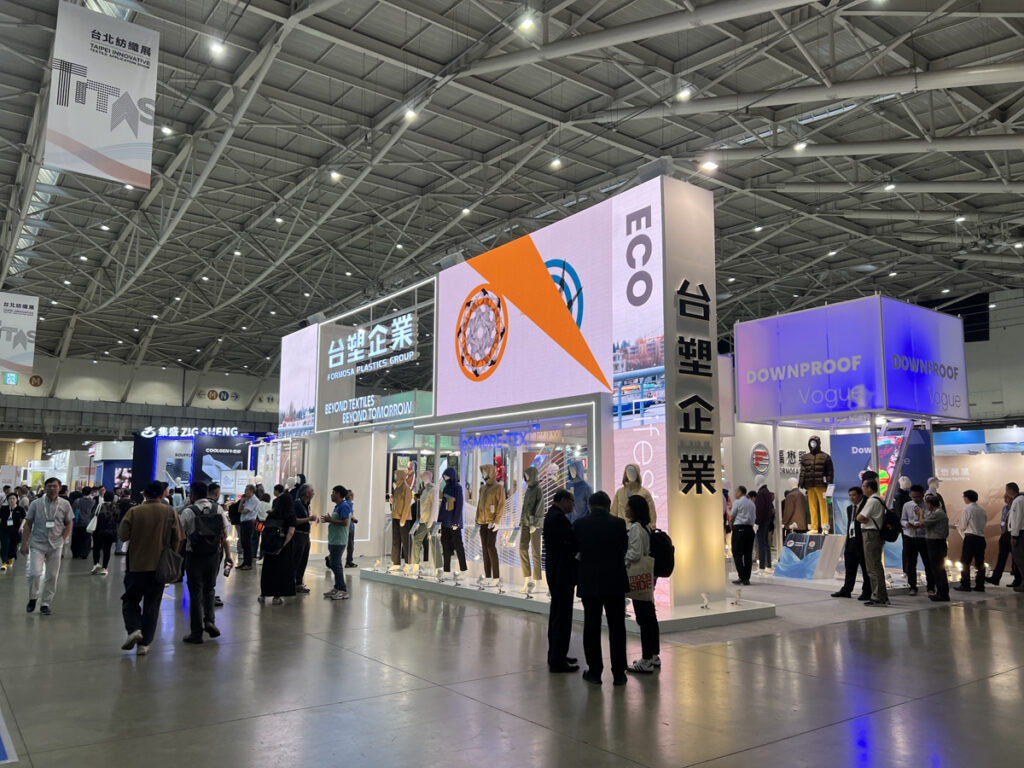
The 2025 Taipei Innovative Textile Application Show (TITAS), staged at the Nangang Exhibition Center on 14–16 October, emerged this year as a clear signalling event for the industry’s next chapter: accelerated digitalisation through artificial intelligence, tighter product-level sustainability requirements, and a practical push toward circular, low-carbon manufacturing. With 388 exhibitors across 904 booths and nearly 70 international brands in attendance, TITAS 2025 showcased how Taiwan’s textile ecosystem — from fibre innovators to garment component makers and smart-manufacturing technology providers — is translating strategy into procureable solutions for global brands and supply chains.
Government backing plus private innovation — a coordinated national play
The Taiwan government’s visible presence at TITAS underscored the strategic importance of textiles to the island’s industrial policy. Vice-President Bi-khim Hsiao opened the show and toured leading booths, signalling continued government support for initiatives such as “AI Adoption for All Industries” and export supply-chain assistance for higher-value, sustainable manufacturing. That public/private coordination — policy incentives meeting deep industrial know-how — was a recurring motif throughout the halls.
AI and smart manufacturing: from lab demos to buyer procurement
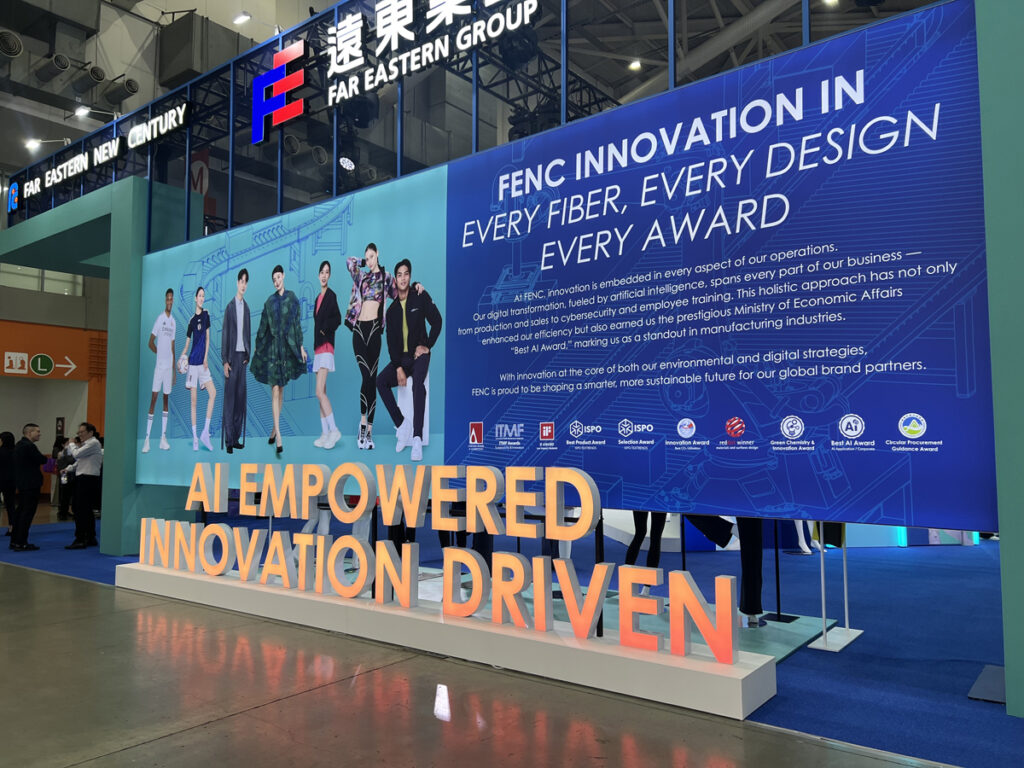
A defining theme at TITAS was the operationalisation of AI across the value chain. Exhibitors demonstrated AI-enabled QC and process optimisation tools, predictive maintenance for textile machinery, and software platforms that speed product development and customization. The emphasis was not on speculative AI hype but on concrete procurement outcomes: reduced lead times, lower defect rates, and improved material yield — precisely the levers brands need when scaling sustainable product lines. TITAS positioned Taiwan as a place where factories can both “root” advanced manufacturing and connect seamlessly to global digital product-information flows.
Sustainability beyond marketing — traceability, low carbon and circular inputs
Global policy changes and brand expectations were clearly shaping exhibitor roadmaps. With the EU’s Digital Product Passport and growing demand for product-level emissions transparency on the near horizon, many Taiwanese suppliers were presenting offerings that combine material innovation (bio-based and recycled feedstocks) with digital traceability and lifecycle data capture. The show’s programming and pavilion exhibits highlighted sustainable fibres, carbon capture and low-impact finishing processes — signalling a move from scattered pilots to supply-chain-ready solutions.
Functional textiles: sports, performance and new end-use niches
TITAS continued to affirm Taiwan’s global leadership in performance fabrics. The event emphasised sport textiles, technical textiles, and advanced knits engineered for moisture management, thermal regulation and durability. Several suppliers showcased next-generation coatings and composites aimed at medical, industrial and adaptive-wear applications — markets where performance and traceability increasingly justify premium pricing and long-term partnerships.
Design + manufacturing collaborations: “Recode 2050” and cross-discipline showcases
A noteworthy addition was the “Recode 2050” fashion showcase — a government-supported initiative pairing Taiwanese mills with designers to demonstrate how advanced materials and circular design principles translate into compelling consumer products. These cross-discipline collaborations help close the gap between materials R&D and commercial adoption by giving buyers tangible examples of finished applications that meet sustainability and aesthetic brief.
Buyer delegations and market reach: Korea, Vietnam, India and beyond
TITAS 2025 attracted organised buyer delegations from Korea, Vietnam and India, among others, reflecting ongoing demand for Taiwanese innovation across major sourcing markets. The presence of these delegations — together with the participation of nearly 70 international brands — reinforced the event’s role as a procurement platform rather than a purely local technologies fair. For suppliers, that meant business conversations rather than just show-and-tell.
Spotlight on concrete technologies and product groups
- Circularity enablers: Recycled yarns and mono-material solutions that simplify end-of-life processing; technologies for mechanical and chemical recycling were both on display.
- Biobased materials: Bio-derived polymers and fibres presented as drop-in alternatives for certain performance categories.
- Low-carbon processing: Energy-efficient dyeing and finishing lines, heat-capture systems and solvent-reduction chemistries that lower per-product emissions.
- Intelligent finishing and coatings: Functional finishes that add antimicrobial, anti-odour or durable water repellency with improved chemical profiles.
What buyers and brands should take away
- Integration of tech + traceability is maturing. Suppliers are increasingly offering material innovation together with the data layers buyers demand — from provenance to process emissions — reducing the friction for brands moving toward verified sustainable assortments.
- AI is a procurement-ready productivity tool. Where AI was shown in production contexts, the benefits were practical (yield, uptime, defects), not only conceptual — a strong signal for brands seeking resilient, scalable partners.
- Circularity requires systems thinking. Many exhibitors now accept that textile circularity isn’t a single technology but a systems problem — design for recyclability, mono-materials, takeback infrastructure and end-market development must be aligned.
Challenges and open questions
Despite the optimism, several industry realities remain: cost parity for many sustainable inputs is not yet universal; regulatory timelines (e.g., implementation details of DPPS and other compliance schemes) remain uncertain; and scaling recycling technologies to economically viable volumes continues to require capital and policy support. TITAS framed these gaps candidly — not to dampen momentum but to orient investments toward the hard work ahead.
Why TITAS matters now
TITAS 2025 was more than a regional trade show; it was evidence that Taiwan’s ecosystem — supported by public policy, strong OEMs and a dense supplier network — is building the practical building blocks global brands need to deliver on sustainability and agility. The event’s mix of AI-driven factory tools, material innovation and buyer engagement suggests that Taiwan intends to be a strategic partner for brands seeking to reconcile product performance with traceable, lower-carbon supply chains.
Final note — a market for partnerships
If there was a single message for Indian and other international buyers, it was this: TITAS offers a pathway to partner with suppliers who combine technical textile excellence and concrete digital capabilities. For brands and sourcing teams re-shaping their global supply maps, Taiwan’s “make for the world” positioning — supported by demonstrable innovations at TITAS 2025 — is worth a focused procurement visit and pilot collaboration.

-1160x653.jpg)